







### Navigating the NMPA: China’s Ambitious but Unpredictable AI Medical Device Landscape
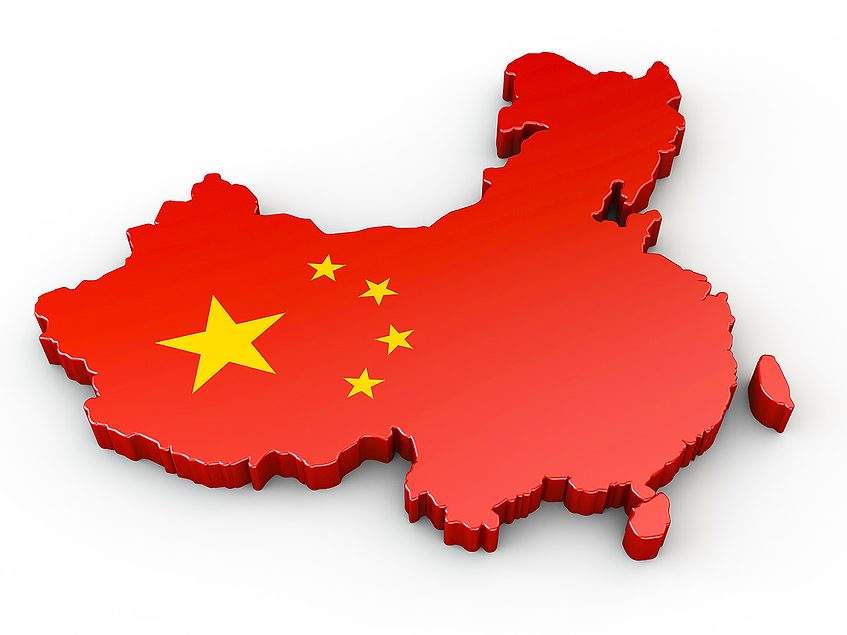
The global race to integrate artificial intelligence into healthcare is well underway, with AI-powered medical devices (AI/ML-MDs) promising to revolutionize diagnostics, treatment planning, and patient outcomes. As developers push the boundaries of innovation, regulatory bodies worldwide are grappling with a fundamental challenge: how to ensure the safety and efficacy of a technology that is complex, often opaque, and rapidly evolving. In this high-stakes environment, all eyes are on China’s National Medical Products Administration (NMPA), an agency that has emerged as one of the world’s most proactive in shaping the regulatory framework for AI.
However, as Chang-Hong Whitney of Whitney Consulting Ltd. recently highlighted, this flurry of regulatory activity has not yet translated into a clear and predictable path to market. This creates a fascinating dichotomy for medtech developers: China is leading the charge on guidance, yet its premarket review process remains a landscape of significant uncertainty.
—
### The Proactive Regulator: A Flurry of Guidance
To understand the current situation, we must first acknowledge the NMPA’s impressive speed in addressing AI/ML-MDs. While other major regulatory bodies have been methodical, sometimes even cautious, the NMPA has released a stream of guidelines aimed at clarifying its expectations. Key publications have covered critical areas such as:
* **Technical Review Guidelines for Deep Learning-Based Medical Device Software:** These documents delve into the core technical requirements for AI algorithms, addressing dataset quality, model training, performance evaluation metrics, and the need for robust validation.
* **Cybersecurity Registration and Review Guidance:** Recognizing that AI devices are fundamentally software-based and often networked, the NMPA has placed a strong emphasis on cybersecurity, demanding rigorous risk management and vulnerability assessments.
* **Guidance on Real-World Data (RWD):** The NMPA has shown a forward-thinking willingness to consider real-world data in post-market surveillance, a critical aspect for AI models that may continue to learn or require monitoring after deployment.
This proactive stance signals a clear intent from China to become a global leader not just in AI development, but also in its governance. The NMPA is actively building a framework designed to foster innovation while safeguarding public health. On paper, this is exactly what the industry needs.
### The Predictability Gap: Where Ambition Meets Reality
Despite this impressive output of guidance, the on-the-ground experience for companies navigating the premarket approval process tells a more complex story. The “unpredictability” Whitney mentions stems from several key factors where high-level guidance meets the nuances of specific product reviews.
1. **Interpretive Ambiguity:** The guidelines, while comprehensive, are often open to interpretation by individual reviewers. For a novel AI-based diagnostic tool, one reviewer might focus heavily on the explainability of the algorithm, while another may prioritize the diversity and size of the training dataset. This variability can lead to unexpected questions and requests for additional data late in the review cycle, causing significant delays and cost overruns.
2. **The “Black Box” Challenge:** The inherent complexity of many deep learning models makes demonstrating algorithmic transparency a major hurdle. While the NMPA requires detailed documentation, the standard for what constitutes a sufficiently “explained” model remains fluid. Developers often find themselves in a difficult position, trying to satisfy reviewer concerns about a model’s decision-making process without a universally accepted methodology for doing so.
3. **Stringent Data Requirements:** The NMPA places a heavy emphasis on clinical data derived from Chinese populations. For multinational companies, this often means conducting separate, resource-intensive clinical trials specifically for the Chinese market. The specific requirements for trial design and data collection for a novel AI device may not be fully clear upfront, adding another layer of uncertainty to the market entry strategy.
—
### Conclusion: A Microcosm of a Global Challenge
The situation in China is not an indictment of the NMPA, but rather a powerful illustration of the global challenge in regulating AI in medicine. The agency is commendably attempting to build the regulatory railroad while the AI train is already moving at full speed. The resulting gap between its forward-looking guidance and the practical realities of premarket review is a friction point that developers must learn to navigate.
For companies looking to enter the Chinese market, the key takeaway is that simply complying with the written guidance is not enough. Success requires a strategy of early and continuous engagement with the NMPA, a deep understanding of the clinical context in China, and the agility to adapt to a review process that is still maturing. As the NMPA continues to refine its approach, its journey will offer invaluable lessons for regulators and innovators worldwide. How China resolves this tension between ambition and predictability will undoubtedly shape the future of global AI medtech regulation.
This post is based on the original article at https://www.bioworld.com/articles/724111-china-a-great-ai-med-tech-market-but-premarket-review-unpredictable.