







### Beyond the Algorithm: The Automation Layer Fueling AI in Oncology
When we talk about AI in medicine, the conversation often gravitates towards sophisticated algorithms—deep learning models that can spot tumors in radiological scans or large language models that can parse patient records. But the true potential of AI is unlocked not just by the algorithm, but by the infrastructure that feeds it. A recent FDA approval for a colorectal cancer test from Biocartis is a prime example of this crucial, and often overlooked, “hardware” layer of the AI revolution.
The news itself is a significant clinical milestone: Biocartis, in partnership with Bristol Myers Squibb, received premarket approval for its Idylla Cdx MSI test. This test identifies colorectal cancer patients with Microsatellite Instability (MSI), a key biomarker that indicates a high likelihood of response to certain immunotherapies. On the surface, this is a story about precision medicine. Dig a little deeper, and it becomes a story about automation, data integrity, and the very foundation upon which future medical AI will be built.
—
### The Diagnostic Bottleneck: From Centralized Labs to the Edge
Traditionally, molecular testing like MSI analysis has been a complex, multi-step process confined to specialized central laboratories. A surgeon would resect a tumor, a pathologist would prepare a tissue sample, and that sample would be shipped off for analysis. This workflow, while effective, introduces significant latency—often weeks—between diagnosis and the initiation of targeted treatment. For a cancer patient, this delay is more than an inconvenience; it’s a critical window of uncertainty.
From a data science perspective, this process is fraught with variability. Different labs use different protocols, equipment, and interpretation criteria, introducing noise into the data. This inconsistency is a major obstacle for training robust machine learning models that can predict patient outcomes or treatment responses on a large scale.
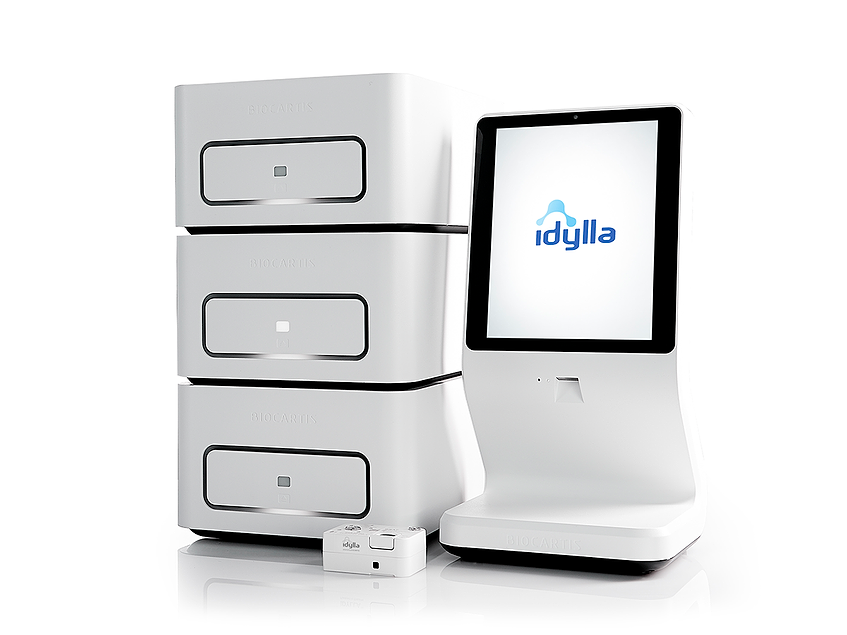
This is where the Idylla system fundamentally changes the game. It is a fully automated, cartridge-based, “sample-to-result” platform. A small tissue sample is placed into a self-contained cartridge, the cartridge goes into the Idylla instrument, and in about 150 minutes, a standardized, actionable result is produced.
This isn’t just an incremental improvement; it’s a paradigm shift. In tech, we would call this **edge computing for molecular pathology**. Instead of sending the raw material (the tissue sample) to a central processing hub (the specialized lab), the analytical power is brought directly to the source—the local hospital or clinic. This move to the edge achieves three critical objectives:
1. **Speed:** It shrinks the diagnostic timeline from weeks to a matter of hours. This allows oncologists to make informed, data-driven decisions about immunotherapy almost immediately.
2. **Standardization:** The sealed cartridge and automated workflow eliminate most of the human variability inherent in manual lab processes. Every test is run the exact same way, every time.
3. **Accessibility:** By simplifying a complex molecular test into a “load-and-go” procedure, this technology can be deployed in a far wider range of clinical settings, democratizing access to cutting-edge diagnostics.
### Building the Data Foundation for True AI
So, where does AI fit into this? While the Idylla system itself is a marvel of automated engineering rather than a learning algorithm, it is creating the perfect conditions for AI to flourish.
High-quality, standardized, and structured data is the lifeblood of any effective machine learning system. By automating and decentralizing MSI testing, platforms like Idylla are generating an unprecedented volume of consistent, reliable data points. Each result is linked to a specific patient, their treatment, and their ultimate outcome.
This creates a powerful feedback loop. As thousands of these standardized tests are performed, we build a rich, clean dataset that is ideal for training predictive models. We can begin to ask more complex questions:
* Beyond a simple MSI-High/Stable result, are there subtle molecular signatures within the data that correlate with an even better or worse response to therapy?
* Can we combine this molecular data with clinical data to predict the likelihood of adverse events from immunotherapy?
* Can we identify novel patterns that suggest new therapeutic targets or patient stratification strategies?
Answering these questions with AI is nearly impossible when your input data comes from a patchwork of labs with different methods and reporting standards. But when the data is generated by a global fleet of standardized, automated instruments, the potential for discovery is immense.
—
### Conclusion: The Intelligence is at the Edge
The FDA’s approval of the Idylla MSI test is a win for patients and clinicians, providing faster access to critical information for colorectal cancer treatment. But from a technology standpoint, it represents something more profound. It’s a demonstration that the path to a future of AI-driven healthcare is paved with smart, automated hardware.
Before we can rely on powerful algorithms in the cloud to guide clinical decisions, we must first solve the data problem at the source. By placing automated, intelligent systems at the clinical edge, we are not just accelerating diagnostics; we are laying the clean, structured, and scalable data foundation that the next generation of medical AI will be built upon. The real intelligence, it turns out, starts in the cartridge.
This post is based on the original article at https://www.bioworld.com/articles/724100-fda-approves-biocartis-idylla-cdx-msi-colorectal-cancer-test.