







# Beyond Monitoring: How AI is Redefining Diabetes Management with Roche’s Smartguide
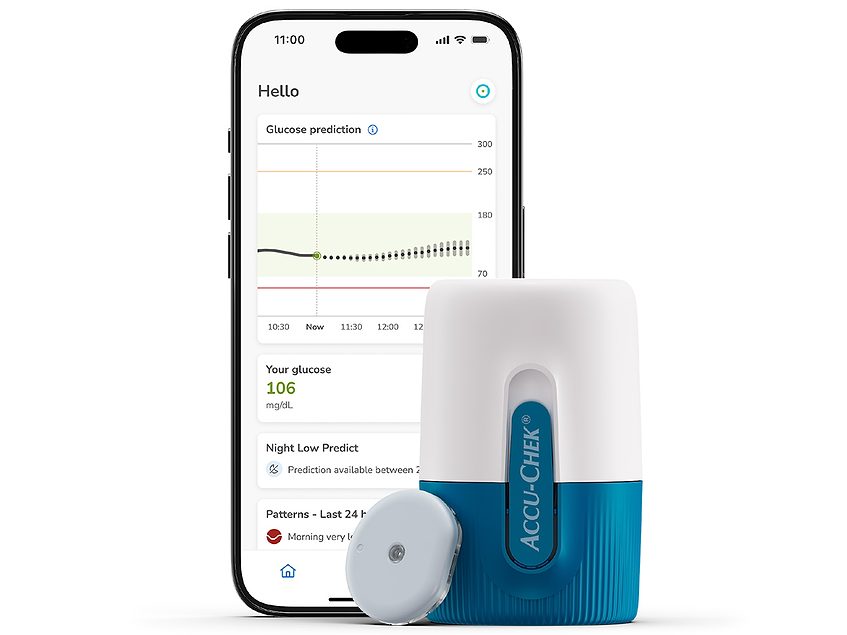
The application of Artificial Intelligence in healthcare is rapidly maturing. We’re moving beyond the realm of diagnostic imaging and into the dynamic, deeply personal space of chronic disease management. A prime example of this evolution just arrived: Roche’s CE mark approval for integrating its Accu-Chek Smartguide, an AI-powered continuous glucose monitoring (CGM) system, with the popular Mysugr diabetes management app.
On the surface, this might look like another simple device integration. But from a technical standpoint, it represents a significant milestone in the shift from reactive to predictive, personalized medicine. Let’s unpack what’s happening under the hood and why it matters.
### From Reactive Data to Predictive Intelligence
Traditional CGMs have been revolutionary, providing a near-continuous stream of glucose data. However, they are fundamentally reactive. A user sees their glucose level is high or low and then decides how to act. The cognitive load—the constant mental calculation of insulin, carbs, activity, and trends—rests entirely on the individual.
The Accu-Chek Smartguide system fundamentally changes this dynamic. The “AI-enabled” descriptor isn’t just marketing fluff; it points to the use of sophisticated predictive algorithms. These are likely time-series forecasting models, possibly based on architectures like LSTMs (Long Short-Term Memory networks), which are exceptionally good at identifying patterns in sequential data.
By analyzing a user’s historical glucose data, these models learn their unique physiological patterns. The system doesn’t just tell you your glucose is 150 mg/dL; it predicts where your glucose is likely to be in the next 30 to 120 minutes. This predictive capability is the first crucial step in transforming data from a simple measurement into actionable intelligence. It gives users a window into the future, allowing them to pre-emptively manage a potential hypoglycemic or hyperglycemic event instead of just reacting to one that’s already happening.
### The Power of a Unified Data Ecosystem
The true power of this system, however, is unlocked through its integration with the Mysugr app. An AI model is only as good as the data it’s trained on. By pulling therapy data—such as insulin doses, meal information, and logged activity—into the same ecosystem as the predictive CGM data, Roche is creating a far richer, more contextual dataset.
This solves the chronic problem of data silos in diabetes management. Previously, a CGM provided one piece of the puzzle, an insulin pump another, and a food-logging app a third. The user had to be the manual integration engine, piecing together disparate information to make a decision.
Now, the AI algorithm has access to the *causes* as well as the *effects*. It can learn the direct relationship between a 4-unit insulin bolus and a subsequent glucose drop, or the impact of a 50-gram carbohydrate meal on a glucose spike for that specific individual. This multi-modal data stream allows the predictive models to become dramatically more accurate and personalized. The system can now answer not just “What is my glucose doing?” but “Given the insulin I just took and the meal I’m about to eat, what will my glucose do, and what should I consider?”
### The Human-in-the-Loop: AI as a Co-pilot
It’s important to note that this is not a fully autonomous “artificial pancreas” or a closed-loop system—at least not yet. The Accu-Chek Smartguide solution functions as an advanced decision support system. The AI acts as a co-pilot, providing intelligent predictions and insights, but the user remains the pilot, making the final therapy decision.
This “human-in-the-loop” approach is a critical and intelligent design choice. It builds trust, ensures safety, and empowers the user rather than replacing them. The challenge—and where good UX design is paramount—is to present these complex AI-driven predictions in a simple, intuitive, and non-intrusive way within the Mysugr interface.
### Conclusion: A Blueprint for the Future
Roche’s integration of the Smartguide and Mysugr is more than just a new product feature; it’s a blueprint for the future of AI in managing chronic conditions. It demonstrates a clear path from passive data collection to proactive, predictive, and highly personalized guidance.
The technical principles at play here—leveraging time-series AI for prediction, breaking down data silos to create a unified ecosystem, and designing an effective human-AI partnership—are universally applicable. As we see more of these intelligent systems gain regulatory approval, we’re witnessing the dawn of a new era where technology doesn’t just help us track our health, but actively helps us manage it, one smart prediction at a time.
This post is based on the original article at https://www.bioworld.com/articles/724112-roche-gets-ce-mark-for-cgm-mysugr-integration.